The quick version
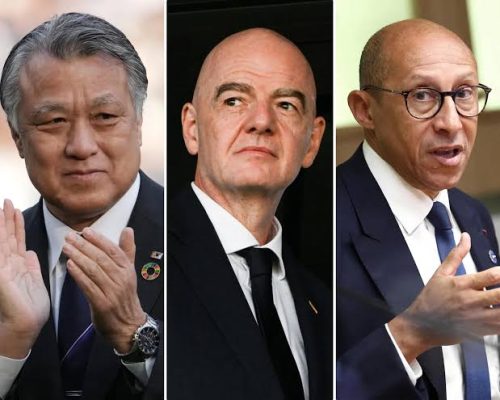
Nominations closed on Wednesday, 18 November, and FIFA confirmed three candidates on Thursday: Philippe Diallo of France, Gianni Infantino of Switzerland and Italy, and Kohzo Tashima of Japan. The vote happens at the 77th FIFA Congress in Rabat, Morocco, on 18 March 2027.
There’s one more hurdle before then. FIFA’s Electoral Committee still has to sign off on each candidate’s eligibility, and member associations will be told who made the cut by 18 February 2027. Every federation gets a vote, and there are 211 of them.
How did we get here?
To understand why this election is suddenly interesting, you have to rewind to July.
When the 2026 World Cup finished on 19 July, Infantino was in a commanding spot. FIFA said it had around 200 letters of support from the 211 member federations. The election was shaping up as a coronation.
Then came the Forward Enterprise plan. Infantino had been working on a deal to sell a minority stake in a new commercial arm tied to future World Cup revenue. Reports put the price at about $4.2 billion, with the buyers led by Joshua Kushner. The plan leaked, the reaction was ugly, and within days it was dropped.
But the damage was done. UEFA said on 1 August that it had lost confidence in Infantino, and its threat to boycott FIFA competitions is widely credited with forcing him to shelve the deal. UEFA, CONCACAF and the AFC then put out an open letter calling the plan a fundamental breach of trust. Infantino apologised publicly, but several European federations had already pulled their support, including Denmark, Finland, Sweden, Serbia and Wales. The Republic of Ireland followed in August.
There’s a wider list of complaints too. Critics point to Infantino creating a FIFA peace prize for Donald Trump with little visible consultation, and to the decision at this summer’s World Cup to lift a mandatory suspension on American forward Folarin Balogun after Trump got involved. Supporters of Infantino see a leader who has grown FIFA’s income dramatically and spread money across the game. Both things are true at the same time, which is partly why this fight is so messy.
It has also gone legal. UEFA is pursuing action in US courts to obtain evidence for a possible criminal complaint in Switzerland alleging financial mismanagement. FIFA has called that a smear campaign. None of it has been proven, so treat it as an allegation and a denial, nothing more.
Meet the candidates
Gianni Infantino, the incumbent
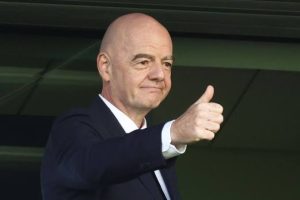
Infantino has run FIFA since 2016, was re-elected in 2023, and is chasing what he has described as a fourth and final term.
His case to the voters is mostly about money and access. FIFA took in billions more from the 48-team World Cup than it did from Qatar 2022, and he has promised every member federation at least $25 million in development funding through 2030. For a lot of smaller associations, that is not an abstract talking point. It’s budget.
He also has the confederations. Africa’s CAF unanimously reaffirmed its backing in August. Asia’s AFC, which had signed that critical open letter, did a notable U-turn in October when its president, Sheikh Salman bin Ibrahim Al Khalifa, endorsed Infantino at a congress in Tokyo. CONMEBOL is reported to be in his corner as well, and six Arab federations, including Qatar and Morocco, have publicly backed him. Argentina and Mexico have been named among his supporters too.
The weak spot is Europe, and the questions about trust and governance that won’t go away.
Philippe Diallo, the late entry
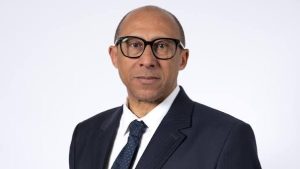
This is the name that changed the race. On Monday, 16 November, UEFA said its European associations had unanimously pledged support for Diallo, the 63-year-old president of the French Football Federation, and invited him to stand. He accepted.
Diallo isn’t a household name outside France, but his CV is solid. He came up through French club football and the professional league, joined the federation’s inner circle in 2021 as treasurer, became interim president in early 2023, and was fast-tracked onto UEFA’s executive committee shortly after. He has also worked as a judge on FIFA’s Dispute Resolution Chamber, which handles contract disputes between players and clubs.
There’s a nice bit of political theatre in his backstory. France was one of the federations that had signed a letter of support for Infantino. Diallo formally withdrew it in September, saying the president’s approach to running world football no longer matched France’s own.
If he wins, he’d be the tenth elected FIFA president, the third from France, and the first full-time president who is Black.
His challenge is obvious. UEFA is a big bloc, but it isn’t a majority, and finding this candidate wasn’t easy. PSG chairman Nasser Al-Khelaifi said in late September he wouldn’t run, Arsène Wenger reportedly decided against it, and CONCACAF’s Victor Montagliani chose to seek another term at his own confederation. Diallo is Plan B, or maybe Plan D. That doesn’t mean he can’t win, but he’ll have to introduce himself to a lot of voters fast.
Kohzo Tashima, the outsider with a message
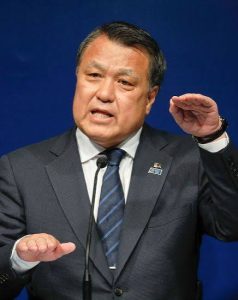
Tashima announced on 5 November, which means he was in the race before Diallo was. He’s 68, a former Japan international midfielder, a long-time Japan Football Association official, and he has sat on the FIFA Council since 2015, back when Sepp Blatter was still in charge. He stepped down as JFA president in 2024 and holds an honorary title there.
His pitch is simple: governance. He says it’s FIFA’s biggest problem, and he has complained that Infantino never answered questions he sent over. Tashima says he filed with the backing of five member associations, which is exactly the minimum a candidate needs.
He has also put a number on his chances, saying he reckons they’re between 20 and 30 percent. That’s his own estimate, and most observers would call it generous. Still, his message is that the contest matters even if he doesn’t win, because the alternative would have been another uncontested coronation.
So who’s likely to win?
Nobody can honestly say yet, and anyone who does is guessing. But here’s a reasonable read of the situation as it stands, based on the reporting so far.
Infantino is still the favourite. He has the big endorsements from Africa and Asia, he has South America, and many smaller federations depend on FIFA’s development money. Even with the summer crisis, his support outside Europe has held up better than many expected.
Diallo is a genuine threat, but the maths is hard. Europe’s bloc gives him a base. To win, he’d need to pull votes from places that have already publicly lined up behind the incumbent. That usually takes months of travel, promises and quiet deals, and he’s starting late.
Tashima’s biggest effect might be on the other two. With two challengers, the anti-Infantino vote could split. If one of them drops out, or the two reach some kind of understanding before March, the dynamics change. That’s the storyline to watch.
One technical note: reports say a simple majority of the 211 votes decides the election, but check FIFA’s statutes for how the rounds work when three candidates are on the ballot before you quote a specific procedure.
The wild cards
A few things could shake this up before March.
- Eligibility rulings. The Electoral Committee has until 18 February to confirm who stays on the ballot.
- The court fight. UEFA’s legal action in the US could produce headlines, or nothing at all.
- Shifting endorsements. The AFC’s turnaround shows how quickly alliances can move. Federations that signed letters of support earlier in the year can, and already have, pulled them.
- Deals behind the scenes. Elections like this are rarely won in the final speech.
Why regular fans should care
It’s easy to shrug at football politics. Here’s why you shouldn’t.
The person who runs FIFA influences how many teams play in the World Cup, how much tickets cost, how the international calendar is packed, and how much of the sport’s income is controlled by a private company versus the governing body. The Forward Enterprise saga was exactly that argument in miniature: who should benefit from World Cup money, and who gets a say?
For African fans, there’s an extra layer. CAF’s 54 associations are one of the biggest voting blocs in the room, and the continent’s backing is a big reason Infantino is still standing. How African federations vote in Rabat, and what they get in return, will shape football investment across the continent for years.
Key dates to remember
- 18 November 2026: Nominations closed. Three candidates confirmed.
- 18 February 2027: Federations told which candidates passed eligibility checks.
- 18 March 2027: Election at the 77th FIFA Congress in Rabat, Morocco.
Quick FAQs
Who are the candidates for FIFA president in 2027?
Philippe Diallo of France, Gianni Infantino, and Kohzo Tashima of Japan.
When and where is the election?
18 March 2027 in Rabat, Morocco.
Who is backing Infantino?
Africa’s CAF and Asia’s AFC have both endorsed him, with reported support from CONMEBOL and several Arab federations.
Who is backing Diallo?
UEFA’s European associations pledged unanimous support.
How many federations vote?
211.
Could Infantino lose?
It’s possible, but on current evidence he remains the one to beat.
The bottom line
This election went from a formality to a real contest in about four months. Infantino still holds most of the cards, Diallo has Europe and a clean message, and Tashima has a principle and not much else. The next four months of campaigning, trading of favours and court filings will decide whether this is a serious challenge or a well-publicised near miss.
We’ll keep this page updated as endorsements and rulings come in.